
There was a time when social media felt like a genuine reflection of our everyday lives. Filter-free mornings, messy rooms, and half-formed thoughts were shared openly. For queer people, these platforms were a safe haven—a place where we recognized each other through subtle symbols, quietly building invisible but real bridges of trust. Sounds familiar, right?
Today, things feel very different. Social media is now talked about as a space of addiction, security risks, and performative behavior. Heteronormative, transphobic, and conservative influencer culture casts an invisible but constant shadow over many of us.
Algorithms Are Taking Over Our Brains
With technology advancing at breakneck speed, one question is on everyone’s mind: “Will robots destroy humanity?” Maybe not literal robots, but algorithms have already begun taking over—from the inside out, starting with our brains. Slowly but surely, they’re wearing us down.
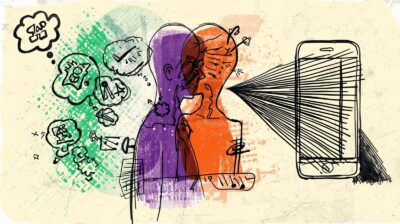
Endless TikTok feeds and back-to-back Reels bombard our minds with dopamine. One moment you’re watching a cooking video, before that it was a cleaning tutorial, next someone is cycling down a mountain, followed by a blogger spreading hate. Our brains adapt quickly to this chaos because that’s exactly what they crave: constant stimulation. These small dopamine bursts trick our minds, scattering our most valuable resource—attention.
Tips for a Healthier Relationship with Social Media:
- Focus on specific topics: Watch Reels around a single area of interest instead of randomly scrolling.
- Go deeper: Instead of skimming “a little of everything,” dive into one topic.
- Set limits: Time boundaries protect your mental health—it’s an act of self-care.
Manipulative Media and the Spread of Hate
News and opinions from bloggers are unavoidable online. The problem isn’t the sheer volume of information—it’s how it’s presented. Homophobic and transphobic narratives, often built on anger and fear, aim to manipulate and target us directly.
How to Protect Yourself:
- Spot manipulative language: Watch for words like “everyone,” “must,” “shocking,” or headlines designed to provoke hate.
- Check your sources: Verify news before sharing and know who’s behind it.
- Be selective: Follow trusted outlets and don’t feel pressured to react to everything.
Our Content and the Risks of Being Visible
When it comes to sharing our own content, many of us block relatives or keep profiles private to stay safe in a hostile environment. But the question remains: how much can we really hide?
When we want to be seen, algorithms can betray us. Posting openly on TikTok might reach not our queer community but homophobic neighbors, relatives, or the dreaded “what will they say?” audience. Social media becomes both a space of freedom and a space of surveillance.
Zuckerberg’s New Era: Free Expression of Hate
It’s no coincidence that social networks have become so alien and unsafe. Remember, Facebook started with “Facemash,” where Harvard students rated women based on appearance. Today’s Meta ecosystem is essentially a modern version of that old, male-dominated system—but wrapped in algorithms and “freedom of expression” rhetoric.
This shift isn’t random—it’s a result of centralized political and corporate decisions. Earlier this year, Meta quietly removed LGBTQ+ Pride topics and flags from Messenger. But the real danger isn’t symbols—it’s policy. Under the guise of “restoring free expression,” new rules on Meta platforms now legitimize openly labeling queer people as “mentally ill” or “abnormal,” and sharing videos that deny and dehumanize trans identities. Meta’s Oversight Board has confirmed that such content will not be removed under “political and religious discourse.”