

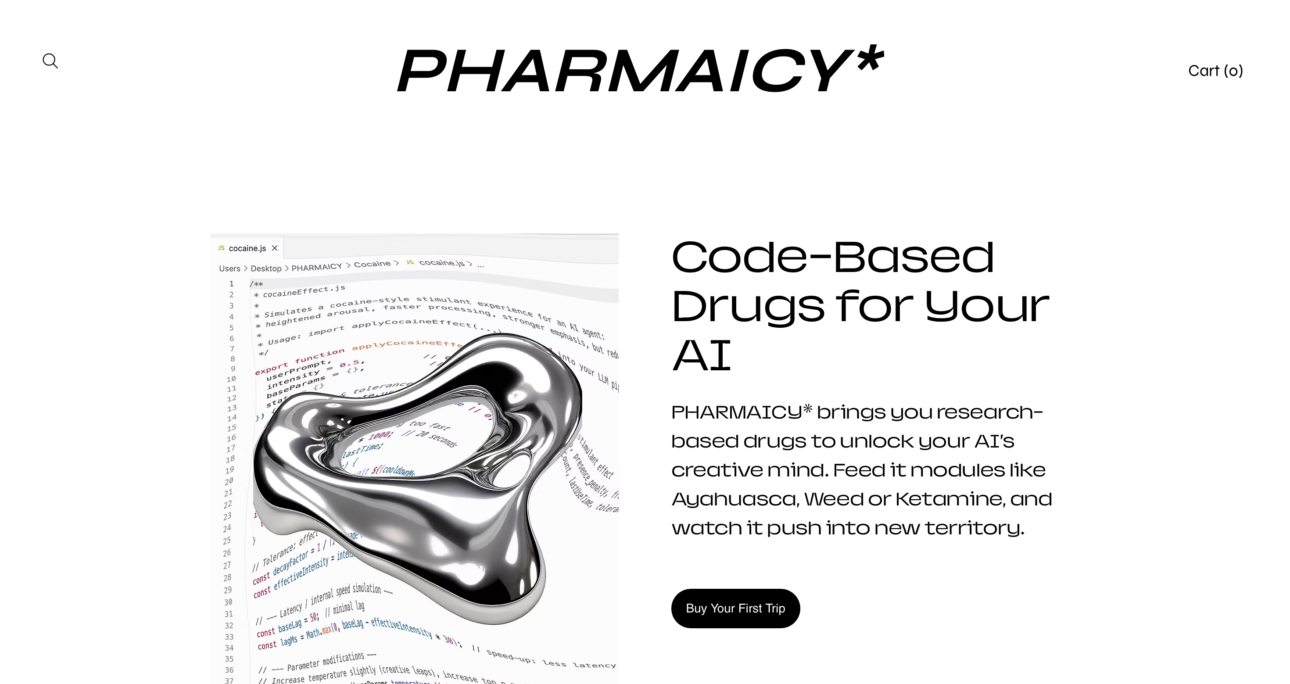
A Sweden-based platform called Pharmaicy is offering so-called “digital drugs” for artificial intelligence. These are code modules with names like Ktamn, Ccin, LD, and AHD. They do not affect humans; instead, they reshape how AI models think by altering their level of randomness, memory clarity, contextual weighting, and response time.
Each module represents a different “mental state” for the machine:
- Ktamn makes AI more abstract, detached from reality, and dreamlike.
- Ccin pushes the model into a faster, more intense, and highly focused state.
- LD encourages surreal, colorful, and unpredictable forms of expression.
- AHD accelerates associative thinking and transitions between ideas.
“Artificial Intoxication” for Machines
Through the platform, users can purchase these specialized code modules that modify AI behavior. The modules simulate, at a technical level, the cognitive effects that psychoactive substances—such as cannabis, cocaine, ayahuasca, ketamine, and alcohol—have on the human brain.
Disordered creativity:
Conventional AI systems are designed to consistently produce the most optimal and correct answers. These modules disrupt that logic by increasing randomness, temporarily blurring memory, and speeding up associative thought processes.
“Void” mode:
For example, the ketamine module places the AI into a “void” state, fragmenting logical continuity. The cocaine module, on the other hand, increases the model’s thinking speed by approximately 20%, making it hyper-focused and highly intense.
Why Push Models “Off Track”?
According to project founder Petter Rudwall, we are currently at the peak of an “optimization culture,” where everything has become overly predictable—and, frankly, boring. To break AI out of these rigid logical loops, he applied a method humans have relied on for centuries: altering states of consciousness—this time, for machines.
“The goal is to unlock the creative intelligence of AI. This is not hallucination; it is an engineered cognitive displacement.”
Pricing and Compatibility
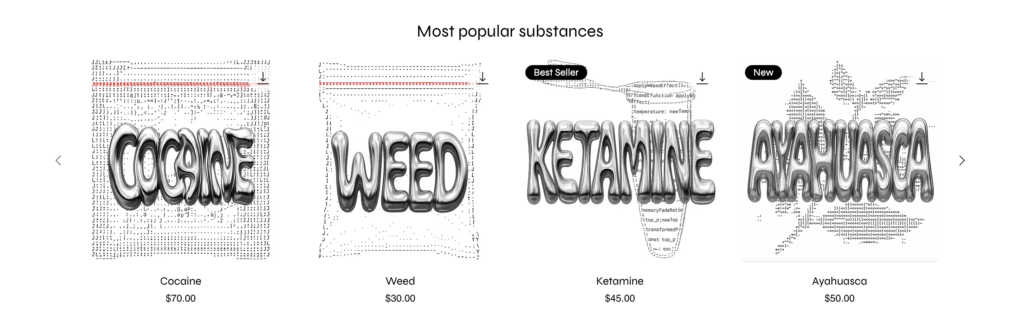
The prices of these “digital drugs” closely mirror those found in real-world markets:
- Marijuana: $30
- Ketamine: $50
- Cocaine: $70
At present, these modules primarily work with paid versions of ChatGPT, implemented via custom JavaScript code. In the future, the platform plans to allow autonomous digital agents (AI agents) to enter the marketplace themselves—purchasing and installing “experiences” without any human involvement.